War Eternal-Divine Battlefield
- 4.1
- Rating
- 5.00M
- Installs
- Free
- Price

 Analysis by App-foxy
I approached War Eternal-Divine Battlefield as a strategy game for players who enjoy building a long-term position rather than finishing a quick match. Its setting points toward a civilization-scale conflict, and the experience is built around making decisions that matter over time: where to invest, when to push forward, and how much attention to give a growing empire. I found it more demanding than a casual puzzle game, but also more rewarding when I had enough time to think through my next move.
Developed by ONEMT, the game is free to start and belongs firmly to the mobile strategy category. It has been available since Apr 22, 2019, and its current Android version is 10.0.189. The store lists a 4.1 average from around 108 thousand ratings, with more than 5 million installs, so this is not an obscure experiment with a tiny audience. It is a mature, established title with a large enough player base to make the world feel more substantial than a purely solo campaign.
How the game feels when the empire starts moving
The first thing I noticed was that War Eternal is not designed around constant instant action. Its pace depends on the stage of your development and on how actively you want to manage the available choices. Early progress can feel reasonably brisk because each new step gives you something to adjust, but the broader rhythm is slower and more deliberate. That is normal for this type of game, yet it is important to understand before installing it: this is a commitment game, not a five-minute arcade diversion.
You May Also Like

 Pandora - Music & Podcasts
Pandora’s Music Is Easy to Start, but Harder to Recover
Pandora’s strength is its low-effort path from a seed to a station. Its weak spot is how much confidence it asks you to place in connection, setup, and quiet recovery.

 AccuWeather: Weather Radar
AccuWeather Review: A Quick, Clear Forecast for Everyday Decisions
For everyday plans, the best forecast is the one you can understand quickly. AccuWeather makes rain timing, radar, and local conditions easy to act on, with a few trade-offs.

 Hill Climb Racing
Why Hill Climb Racing Still Turns Crashes Into One More Run
A tiny car, a bumpy hill and one more upgrade: Hill Climb Racing keeps resurfacing because its simple chaos makes every near-miss feel personal.

 AliExpress - Shopping App
AliExpress Makes Global Shopping Feel Personal, but Shoppers Bear the Risk
AliExpress turns a global marketplace into a pocket-sized discovery engine. Its reach is useful, its shopping loop compelling, and its trade-offs easy to miss.

 Lords Mobile: Kingdom Wars
Lords Mobile Is a Kingdom-Building Routine, Not a Quick Match
A case-by-case verdict on the building, battles, device demands, and social commitments that make Lords Mobile rewarding for some players and exhausting for others.

 PDF Scanner app - TapScanner
TapScanner Makes Paperwork Easier to Capture, Check, and Share
TapScanner makes scanning with a phone feel less like a rescue operation and more like a dependable step in getting work done. Its capture tools are useful, though not flawless.
More From Our News Desk
View All News


I liked that the slower rhythm creates room for planning. Instead of reacting to a new obstacle every few seconds, I could look at my current position and decide whether to strengthen what I already had or prepare for a more ambitious move. The trade-off is that the game can feel less exciting when I only have a short break and want immediate results. Players who expect every tap to produce a visible change may find the waiting and preparation stages frustrating.
My most useful approach was to treat each visit as a short planning session. I would check what had completed, review the next priority, and avoid spending resources simply because they were available. That habit made the game feel faster without pretending that its underlying progression was instant. It also reduced the sense of being pulled into random actions. In a strategy title like this, perceived speed often comes from knowing what to do next, and War Eternal rewards that kind of routine.
The game is also easier to enjoy when I accept that not every decision needs to be corrected immediately. I made better progress by choosing a direction and observing its consequences than by constantly changing plans. This is one reason I would recommend it to someone who likes management and gradual improvement. If you prefer a strategy game where a complete match has a clear beginning and end in one sitting, a traditional turn-based title may suit you better.
Where attention matters most
The heavier moments arrive when several parts of the empire need attention at once. A new opportunity may appear while another development is still underway, and the temptation is to act on everything immediately. I found that this is where the game tests organization more than reflexes. A player who keeps a simple priority order will usually feel less overwhelmed than someone who taps through every available option without a plan.
One practical workflow is to separate urgent choices from useful but nonessential ones. I would first handle anything connected to immediate progress, then consider improvements that would help later. This sounds simple, but it prevents a common mistake: spending limited resources on a small convenience and then lacking enough flexibility for a more important decision. The game becomes clearer when I ask, “What will still matter after my next few visits?” rather than “What can I activate right now?”
Longer sessions can also become mentally heavy because there is more to remember. I found it helpful to stop after reaching a sensible checkpoint instead of continuing until every possible action was exhausted. That approach kept the game from turning into a chore and made the next session easier to resume. It is a small but meaningful advantage for people who play on a commute, during a lunch break, or in several short visits throughout the day.
Players should also be aware of the financial pressure built into the free-to-play structure. The game costs nothing to download, but its in-app purchases range from $0.99 to $99.99 per item. I would not recommend entering without deciding on a personal spending limit. The most comfortable way to play is to treat purchases as optional acceleration rather than as part of the basic cost of access. Anyone who dislikes games where spending can influence the pace of progress should think carefully before committing time here.
My advice is to avoid buying anything during the first enthusiastic session. Learn the progression loop, see whether the waiting periods bother you, and decide whether the strategic layer is enjoyable without paid help. This is a more reliable test than judging the game by its opening momentum. It also protects players who are easily tempted by convenience purchases when they have not yet worked out their preferred style.
Reliability during ordinary play
In normal use, the important question is not only whether the game launches, but whether it remains comfortable as a regular habit. My experience was that the title makes the most sense when I return to it consistently. Its design favors continuity, so a missed session can make the next visit feel busier as I sort through what has changed. That is not necessarily a technical problem, but it affects the feeling of reliability: the game expects me to remember its priorities.
I would describe the overall experience as more dependable when I keep my sessions focused. Rapidly jumping between menus, making several changes at once, and trying to manage every possibility can make the interface feel more demanding than it needs to be. A calmer sequence—review, choose, confirm, and then leave the game to progress—was easier to follow. This is one of the less obvious lessons of the title: stability is partly about how the player uses the system.
Recovery is another practical consideration. When I returned after a break, I found that a written mental note or a clear next objective helped me get back into the game quickly. Without that, the number of available decisions could make the first few minutes feel like administrative work. I would like the experience to do more of that orientation for the player, especially for anyone who does not play every day.
The mature rating is also worth taking seriously. The game is marked Mature 17+, so it is not a suitable recommendation for younger children. Adults should also consider whether the war-focused presentation and competitive atmosphere match what they want from a mobile game. Someone looking for a relaxed city builder with no aggressive tone may be happier with a gentler alternative.
The rating and audience size suggest that many players find the overall package worthwhile, but I would not treat popularity as proof that it will suit everyone. Strategy games create very personal reactions. Some players enjoy a persistent world because it gives their decisions weight; others dislike the feeling that the game continues to ask for attention after they put the phone down. War Eternal sits clearly on the first side of that divide.
Device limits and everyday practicality
On Android, the listed minimum operating system is Android 5.0, which gives the game broad compatibility with older software environments. That does not mean every older phone will deliver the same experience. A device may meet the operating-system requirement and still feel less comfortable if it has limited memory, modest storage headroom, or a screen that makes dense strategy menus tiring to read.
I would install it on a phone with enough free space for the game and its future updates, rather than treating the minimum operating system as a guarantee of smooth play. Strategy games can place less pressure on rapid touch response than action games, but long sessions still expose weaknesses in an aging device. If your phone already struggles when several apps are open, closing background apps before playing is a sensible precaution.
Battery expectations should also be realistic. I would not choose this game for a long session while travelling without access to a charger, especially if I planned to keep checking progress repeatedly. The most efficient pattern is to make decisions, leave the game, and return later instead of keeping the screen active for no reason. That workflow fits the game’s strategic pace and is kinder to the phone.
Network quality matters in a different way from raw graphics performance. A persistent strategy experience depends on keeping your progress and actions aligned with the game world, so an unstable connection can be more annoying than a lower frame rate. I prefer to play when the connection is dependable, particularly before making an important decision. If your daily routine involves long periods with unreliable service, this may not be the best primary strategy game for you.
Players using older hardware should also lower their expectations about multitasking. I would avoid switching repeatedly between the game and several other demanding apps, because that can make returning to the session less seamless. The game is more practical when treated as the main app for a short period, then closed cleanly when the visit is over.
Who will get the most from it?
War Eternal is a good match for someone who enjoys watching a civilization develop through repeated decisions. You do not need to be an expert strategist to begin, but you do need patience. The strongest audience is made up of players who like gradual progress, resource choices, and the feeling that a small decision today can shape a later opportunity.
A realistic everyday scenario would be a player checking in before work, making one or two carefully chosen adjustments, and returning during a break to review the result. In the evening, that player might spend more time planning the next stage rather than trying to complete everything in a single sitting. I found this pattern more satisfying than marathon play because it gave each visit a purpose and kept the game from becoming repetitive.
It is less suitable for someone who wants a self-contained campaign, a quick competitive match, or a game that can be fully understood in one evening. It is also a poor choice for anyone who feels uncomfortable with optional purchases that can speed up progress. In those cases, a premium strategy game with a single upfront price, or a turn-based game with clearly bounded sessions, may offer better value and less pressure.
Compared with a conventional city-building alternative, this title feels more focused on the tension of a wider conflict rather than simply decorating and expanding a peaceful settlement. Compared with a traditional board-style strategy game, it is more persistent and less neatly divided into individual matches. That persistence is its main attraction, but also its main demand: the game asks you to think about continuity, not just the best move in one isolated round.
I also think it works best for players who enjoy learning through small mistakes. My early decisions were not always efficient, but they showed me which priorities mattered more. The game becomes more interesting once I stop trying to optimize every action immediately and start building a repeatable method. That learning curve may be satisfying for experienced strategy fans, while newcomers may need to give themselves permission to play imperfectly.
My performance verdict after settling into the rhythm
My final view is that War Eternal-Divine Battlefield succeeds when approached as a patient, ongoing strategy experience. Its perceived speed is moderate rather than frantic, its heavier moments come from managing several priorities, and its practical performance depends as much on sensible session habits as on the phone itself. I would not describe it as effortless, but I found the structure easier to handle once I stopped expecting constant action.
The free entry point is useful because it lets you test the central rhythm before spending anything. At the same time, the wide purchase range means I would keep a close eye on the way convenience is presented. The game is most enjoyable when I make decisions because they fit my plan, not because I feel rushed into paying to remove friction.
For Android users on a reasonably maintained device, I think it is worth trying if the idea of a persistent civilization and war strategy game appeals to you. The current version, 10.0.189, gives prospective players a clear reference point when checking compatibility, while the Android 5.0 minimum makes the title accessible to a broad range of devices. I would still leave room for updates and avoid assuming that an older phone will feel as comfortable as a newer one.
My recommendation is conditional but positive: install it if you want a long-form strategy routine, enjoy returning to an evolving world, and can accept a slower pace with optional spending. Skip it if you want instant matches, a completely offline-feeling experience, or a game with no pressure around acceleration. For the right player, the best part is the gradual sense of control—not winning every moment, but learning how to make the next decision count.
FAQs for War Eternal-Divine Battlefield
01What is War Eternal-Divine Battlefield?
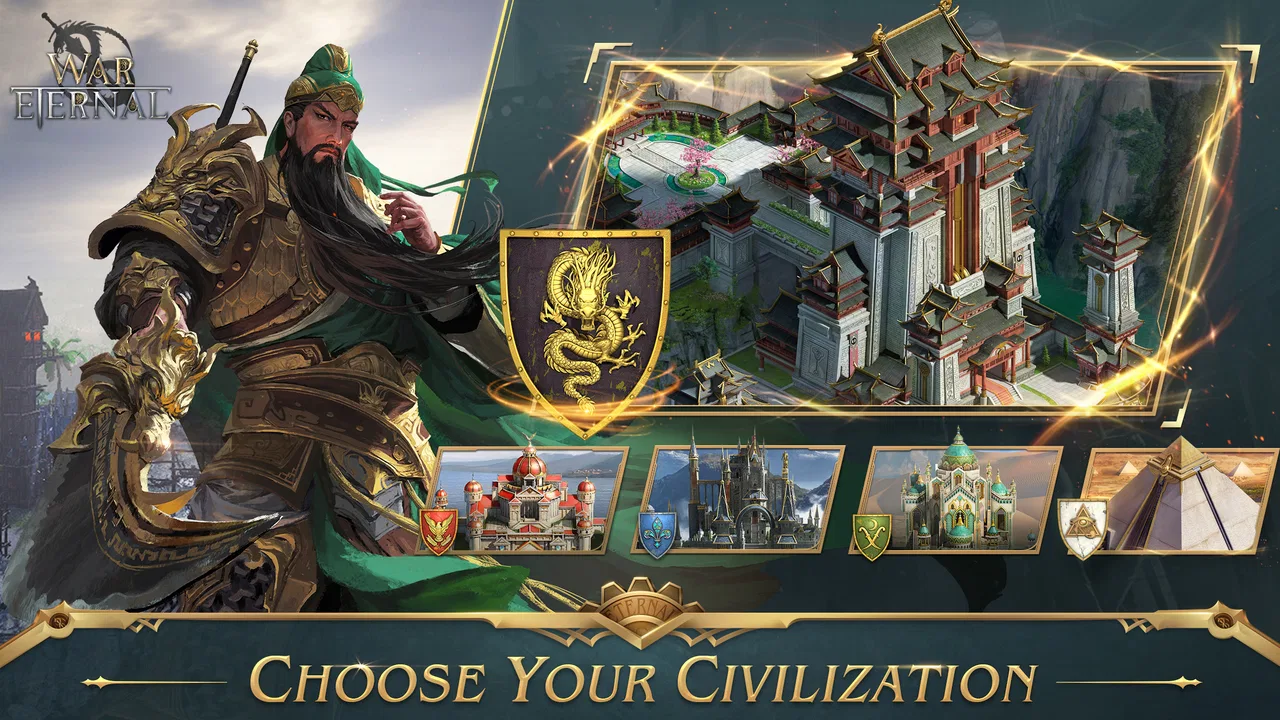
War Eternal-Divine Battlefield is a mobile strategy game centered on empire building, territorial expansion, resource management, and real-time or asynchronous competition. Players typically develop a civilization, upgrade buildings, train armies, research technologies, and cooperate or compete with other users. Its appeal comes from combining long-term progression with battles, alliances, events, and strategic decisions rather than relying only on quick action gameplay.
02Is War Eternal-Divine Battlefield free to download and play?
The game is generally available as a free download, allowing players to begin without paying an upfront purchase price. However, it may include optional in-app purchases for premium currency, acceleration items, resources, cosmetic content, or progression advantages. You can play without spending money, but progress may require more patience, especially when construction timers, troop training, and competitive events become more demanding.
03Does the game require an internet connection?
Yes, War Eternal-Divine Battlefield is designed as an online strategy experience and normally requires a stable internet connection. Online access is needed to synchronize your city, armies, resources, alliance activity, events, and interactions with other players. Because of this, it is not the best choice for offline gaming during flights, travel, or areas with unreliable mobile data or Wi-Fi.
04Is War Eternal-Divine Battlefield suitable for beginners?
Beginners can learn the basic systems through introductory tasks, guided upgrades, and early missions, but the game becomes more complex as additional buildings, commanders, technologies, and battle mechanics are unlocked. New players should focus on completing objectives, protecting resources, joining an active alliance, and upgrading efficiently. Reading item descriptions and learning from alliance members can make the early experience considerably smoother.
05Does War Eternal-Divine Battlefield contain ads or in-app purchases?
The game may use advertisements, optional purchases, or both, depending on the platform, region, and current version. Purchases can provide premium currency, resource bundles, speed-ups, special offers, or other convenience items. Spending is not always required to participate, but users who compete heavily may notice advantages for paying players. Review purchase confirmations and parental controls before allowing transactions on the device.
Pros
- Large-scale battles create an exciting sense of progression.
- Multiple factions and commanders offer varied strategic options.
- Regular events provide goals beyond the main campaign.
- Alliance features encourage cooperation with other players.
- The fantasy artwork gives the battlefield a distinctive atmosphere.
Cons
- Progress can feel slow without frequent play or resource spending.
- The interface may seem overwhelming for newcomers.
- Events and rewards often favor highly active alliances.
- Some battles rely heavily on troop power rather than tactics.
- Requires a stable internet connection for nearly all features.

War Eternal-Divine Battlefield
Gallery